Our Methodology for Building
Reliable Campaign & Social Impact Platforms
At Webotix, we follow a structured, scalability-first methodology to build enterprise-grade
campaign and social impact platforms. Our approach ensures smooth participant engagement,
accurate campaign data tracking, seamless system integration, and reliable reporting while
supporting high participation volumes, recurring annual campaigns, and long-term program
continuity.
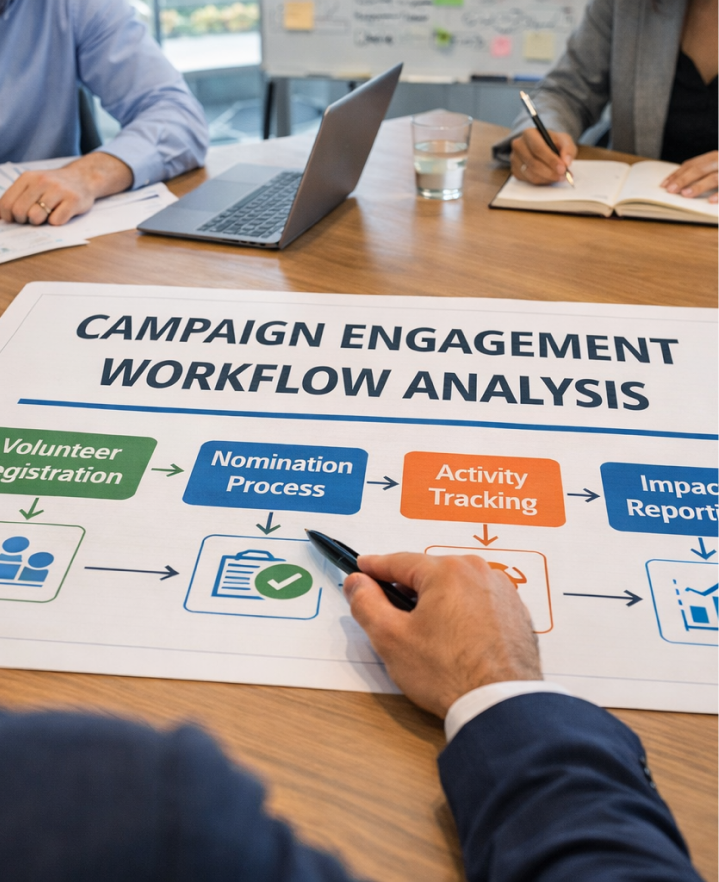
To deeply understand the client’s campaign ecosystem, volunteer engagement workflows, nomination processes, and limitations of existing campaign platforms, and translate these insights into a clearly defined campaign management problem space. This phase ensures real-world campaign execution flows, data synchronization needs, certificate accuracy, and reporting expectations are fully analyzed before solution design begins
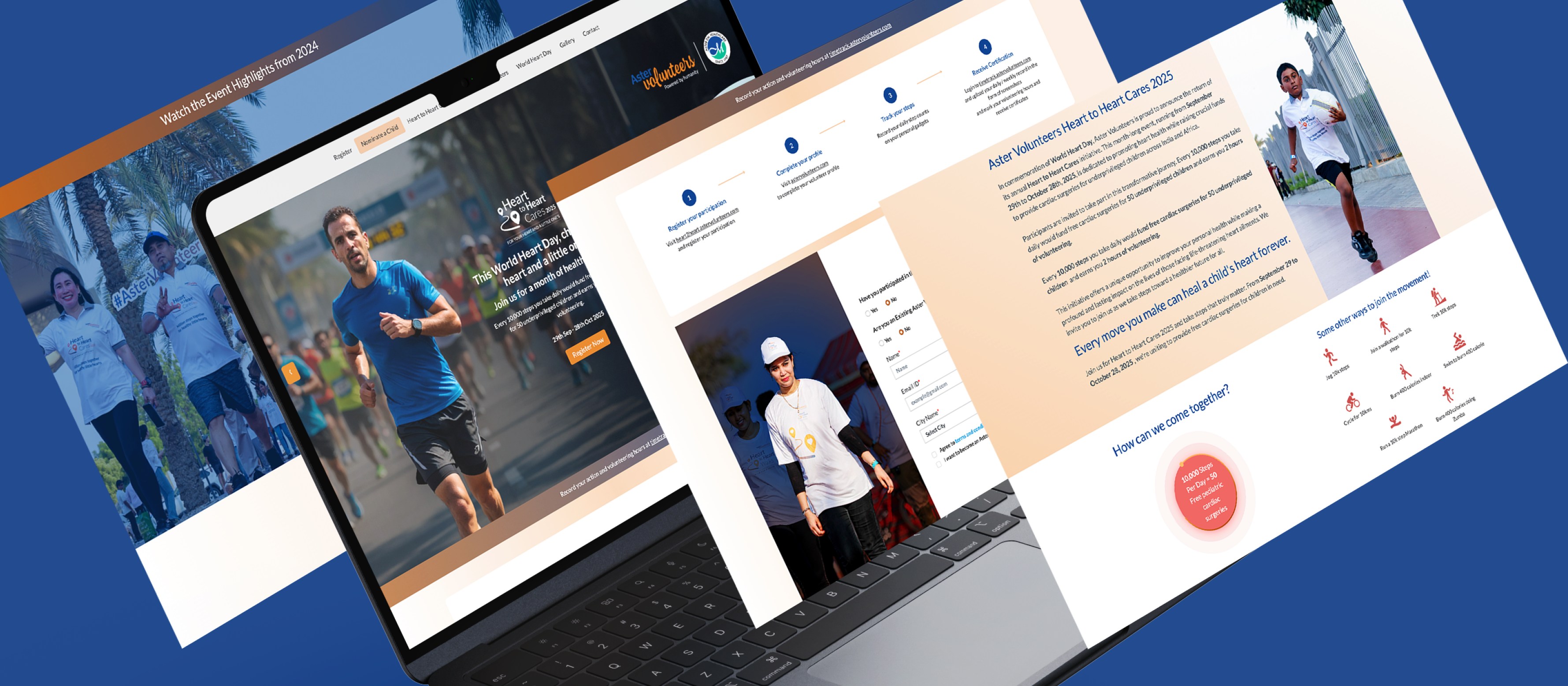
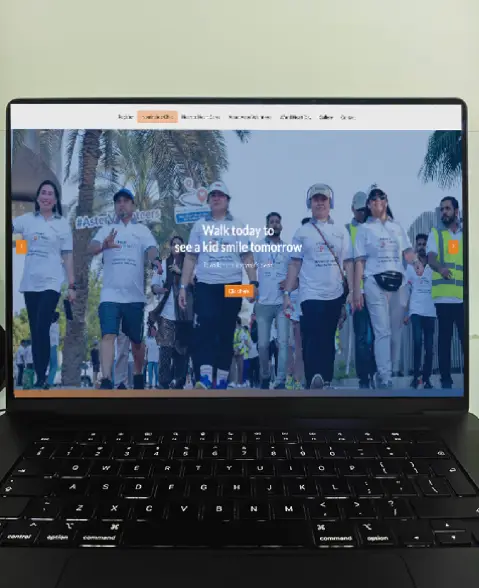
Campaign Use Case Analysis: Studied volunteer registrations, nominations, participation flows, and engagement activities across campaign phases. ➤ Existing Platform & Data Review: Analyzed the existing Heart to Heart website, backend workflows, and TimeTrack integration to identify gaps and improvement areas. ➤ Campaign Structure & Year-Wise Data Assessment: Reviewed annual campaign cycles, data separation needs, and year-specific reporting requirements. ➤ Campaign Data Flow Mapping: Mapped registrations, nominations, backend synchronization, activity tracking, certificates, and reporting flows. ➤ Risk & Scalability Evaluation: Identified risks related to data duplication, year-wise record accuracy, peak traffic handling, and integration stability.
- Conducted structured discovery sessions with campaign coordinators and CSR teams
- Broke down campaign workflows into clear, integration-ready digital processes
- Validated assumptions using previous campaign execution scenarios
- Prioritized features based on data accuracy and campaign impact
- Maintained continuous alignment between campaign and technical teams
- Clear definition of campaign platform scope and objective
- Reduced integration and reporting risks
- Strong alignment between campaign goals and system design
- Faster decision-making through validated workflows
- Solid foundation for scalable annual campaign platforms
To convert identified campaign execution challenges, integration needs, and reporting expectations into structured, actionable system requirements that guide the development of a reliable campaign management platform.
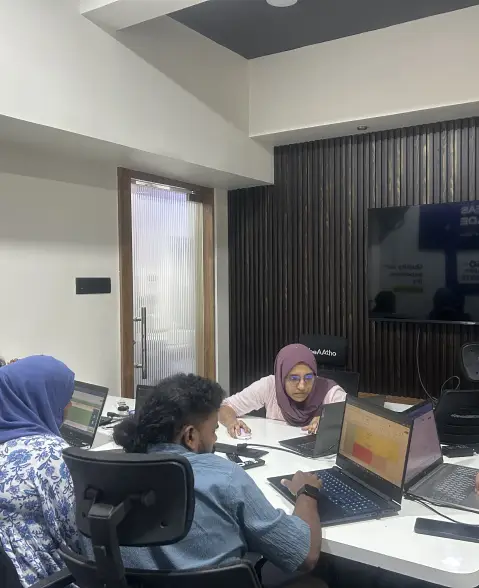
Stakeholder Requirement Collection: Captured requirements from CSR teams, campaign coordinators, and system administrators. ➤ Functional Requirement Definition: Defined registration, nomination, synchronization, reporting, and certificate-related functions. ➤ Non-Functional Requirement Identification: Outlined performance, scalability, availability, and data consistency expectations. ➤ Integration & Dependency Mapping: Mapped dependencies between the Heart to Heart platform, TimeTrack system, and reporting modules. ➤ Requirement Validation & Sign-Off: Reviewed and validated requirements with stakeholders for clarity and alignment.
- Converted requirements into structured epics and user stories
- Maintained traceability between requirements and platform features
- Conducted iterative reviews to avoid scope ambiguity
- Prioritized requirements based on campaign criticality
- Ensured early alignment between business and development teams
- Clearly documented campaign requirements ready for execution
- Reduced rework during development.
- Improved coordination between CSR and technical teams.
- Faster transition from planning to design.
- Strong foundation for scalable implementation.
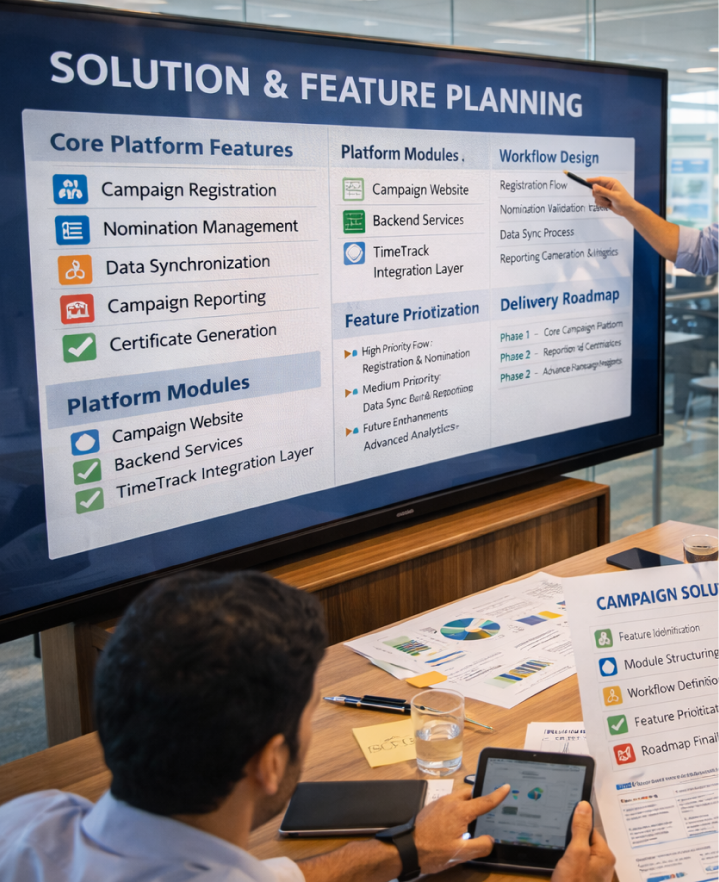
To design a comprehensive campaign solution by defining platform features, modules, and workflows that support volunteer engagement, backend synchronization, year-wise data accuracy, and reporting.
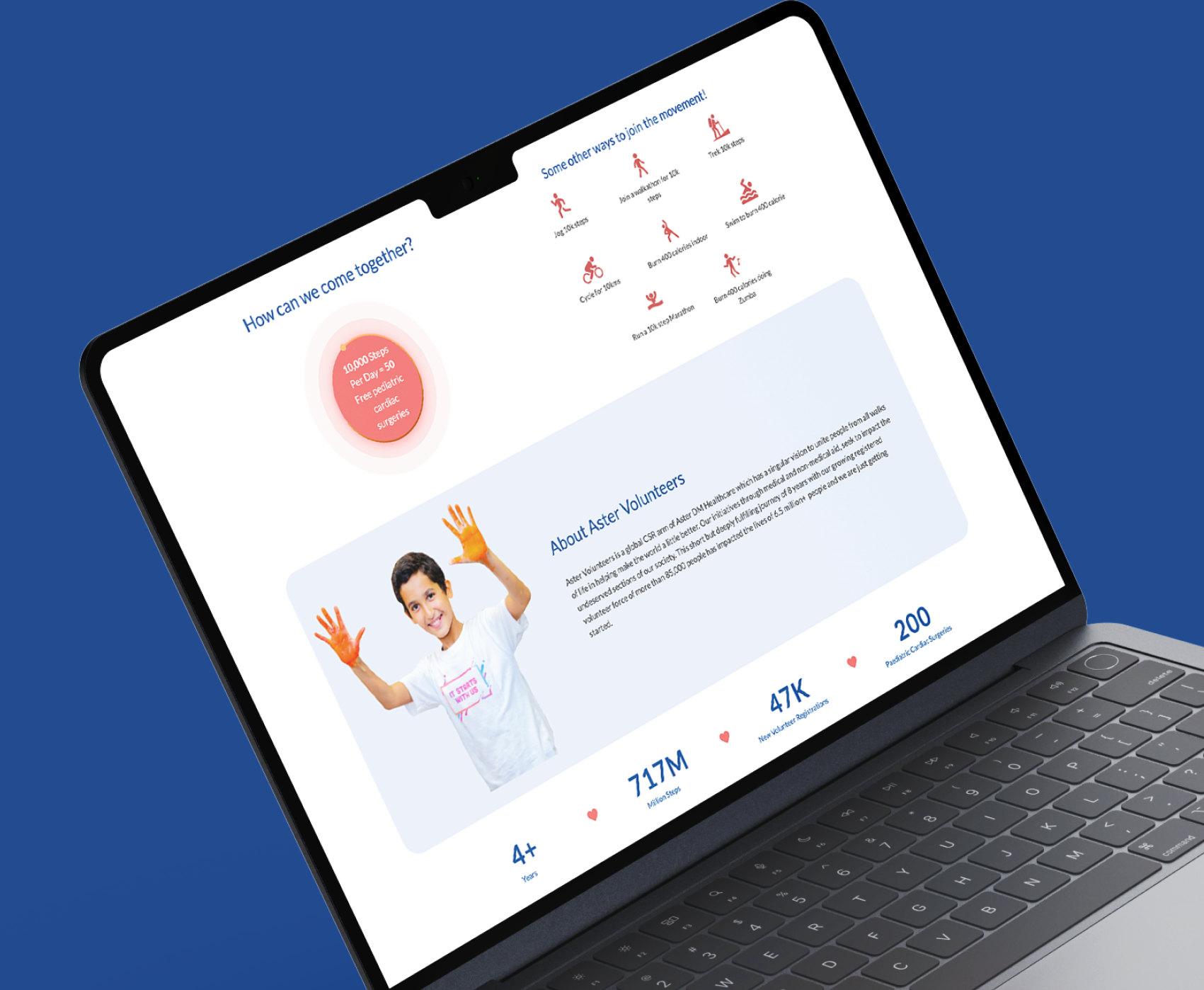
Feature Identification: Identified core features such as campaign registration, nomination management, data synchronization, and reporting. ➤ Module Structuring: Organized features across the campaign website, backend services, and TimeTrack integration layer. ➤ Workflow Definition: Designed end-to-end flows for registration, nomination, syncing, reporting, and certificates. ➤ Feature Prioritization: Prioritized features based on campaign execution accuracy and reporting impact. ➤ Roadmap Finalization: Prepared a phased delivery roadmap to support current and future campaign editions.
- Planned features in incremental delivery phases
- Balanced immediate campaign needs with long-term scalability
- Reviewed scope during sprint planning cycles
- Ensured alignment between solution design and feasibility
- Maintained flexibility for future campaign enhancements
- Clear visibility into platform capabilitie
- Reduced implementation risks.
- Faster delivery of critical campaign features
- Better control over timelines and effort
- Future-ready campaign platform roadmap
To design intuitive, role-based user journeys that simplify participation for volunteers while providing clear oversight and control for campaign administrators and coordinators.
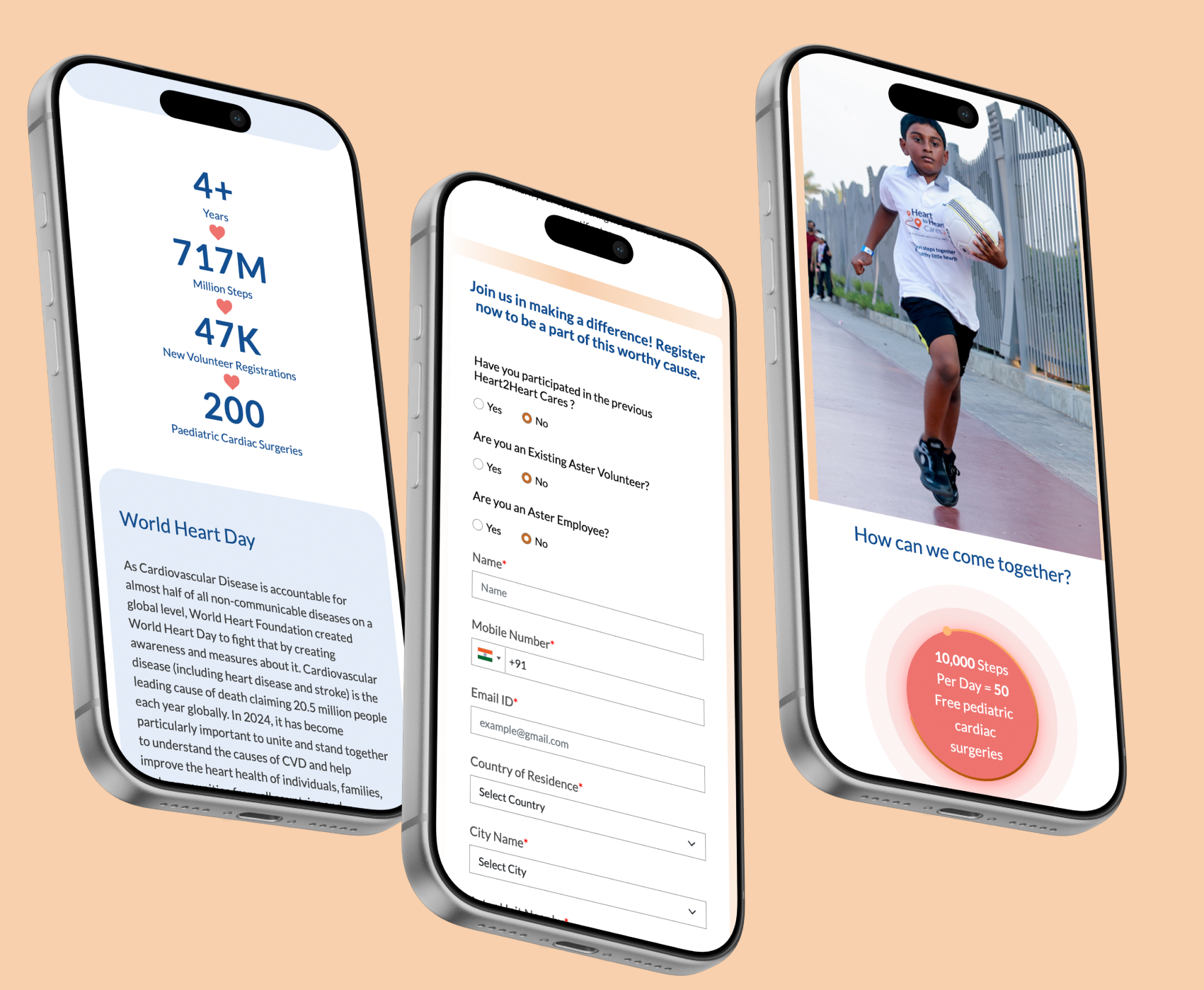
User Role Identification: Defined journeys for volunteers, campaign coordinators, and administrators. ➤ Journey Mapping: Mapped workflows for registration, nomination, confirmation, and communication. ➤ UX Simplification: Designed clean, accessible interfaces optimized for campaign participation. ➤ Security & Validation Design: Integrated validations, confirmations, and access controls into workflows. ➤ Usability Validation: Reviewed journeys to ensure clarity, speed, and consistency across devices.
- Designed journeys iteratively based on stakeholder feedback
- Validated usability before rollout.
- Ensured UX aligned with campaign objectives
- Refined flows during sprint reviews.
- Maintained consistency across the platform
- Higher volunteer participation and engagement
- Reduced registration errors.
- Improved adoption by coordinators and admins
- Increased trust in campaign data
- Consistent experience across users
To design a secure, scalable, and enterprise-ready technical architecture capable of supporting high-volume campaign participation, system integrations, and recurring annual campaigns.
Technology Stack Evaluation: Reviewed frameworks, databases, and cloud services suitable for campaign platforms. ➤ API & Integration Architecture Design: Defined secure APIs for synchronization with TimeTrack and reporting systems. ➤ Security Architecture Planning: Planned authentication, authorization, and data validation mechanisms. ➤ Scalability & Performance Design: Designed architecture to handle peak campaign traffic and data loads. ➤ Future Readiness Assessment: Ensured architecture supports future Heart to Heart campaigns and enhancements.
- Selected technologies aligned with scalability and reliability
- Validated architecture through iterative reviews
- Balanced performance and maintainability
- Enabled modular development for independent scaling
- Maintained flexibility for future integrations
- Stable and reliable campaign platform
- Improved system performance under peak load
- Faster onboarding for future campaigns
- Reduced long-term technical risk
- Sustainable foundation for recurring social impact initiatives