Our Structured Approach to Enterprise Web Application Development
Webotix follows a structured, phase-driven approach to enterprise web application development
that converts complex trading, RFQ, and supply-chain requirements into reliable, scalable
ERP systems. Each phase focuses on operational clarity, system scalability, and real-world
business workflows to deliver predictable outcomes through professional Web App Development
services in Dubai.
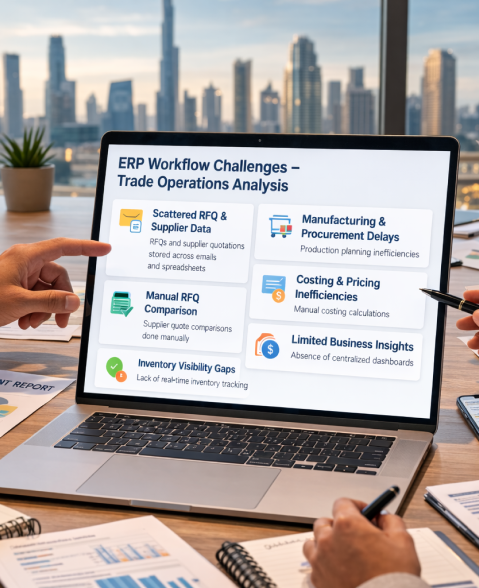
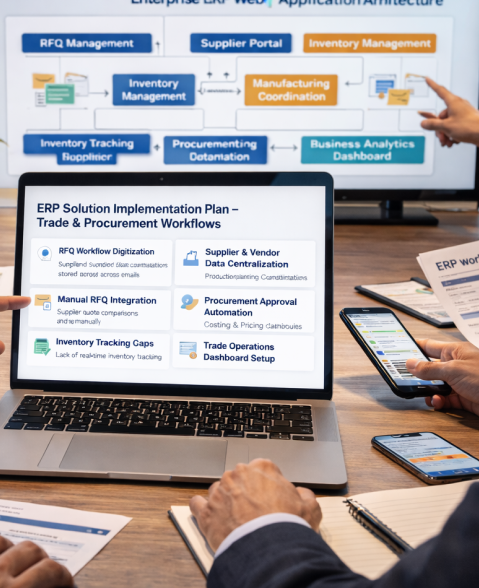
The client, a trading and manufacturing-focused organization, faced challenges managing RFQs, suppliers, inventory, and manufacturing workflows using manual processes and disconnected tools. As RFQ volumes and supplier interactions increased, the absence of a centralized ERP web application impacted cost control, response time, operational visibility, and decision-making. This highlighted the need for structured Web App Development services from a reliable Web App Development Company in Dubai.
Scattered RFQ & Supplier Data: RFQs, quotations, and supplier information were spread across emails and spreadsheets without a centralized enterprise web portal. ➤ Manual RFQ Comparison: Supplier quote comparison relied on manual effort, increasing errors and delays. ➤ Inventory Visibility Gaps: Lack of real-time inventory tracking affected procurement and manufacturing planning. ➤ Manufacturing & Procurement Delays: Production and reorder triggers were not automated within a unified web-based ERP system. ➤ Costing & Pricing Inefficiencies: Quote and costing calculations depended on manual processes. ➤ Limited Business Insights: Management lacked real-time dashboards and analytics for informed decisions.
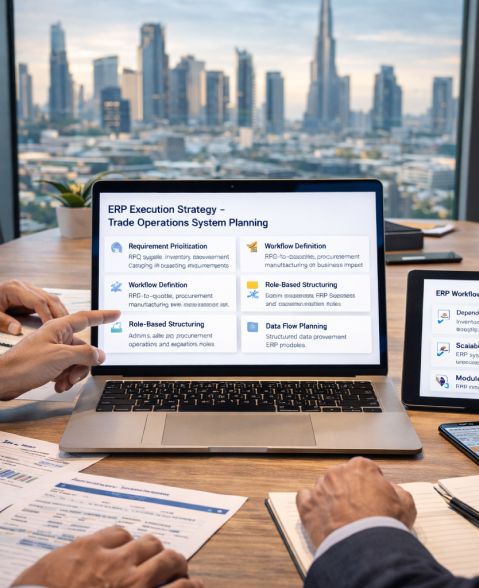
After identifying operational gaps, the focus shifted to defining a clear execution strategy to align RFQ processing, supplier management, inventory control, and manufacturing planning into a single custom ERP web application.
Requirement Prioritization: RFQ, inventory, supplier, and costing requirements were categorized by business impact. ➤ Workflow Definition: RFQ-to-quote, procurement, and manufacturing workflows were mapped end to end. ➤ Role-Based Structuring: Clear responsibilities were defined for admin, sales, procurement, and operations teams using role-based access control. ➤ Data Flow Planning: Structured data movement between RFQs, inventory, suppliers, and costing modules. ➤ Dependency Mapping: Inventory, manufacturing, and supplier dependencies aligned to avoid process delays. ➤ Scalability Consideration: System planning accounted for increasing RFQ volumes and supplier expansion.
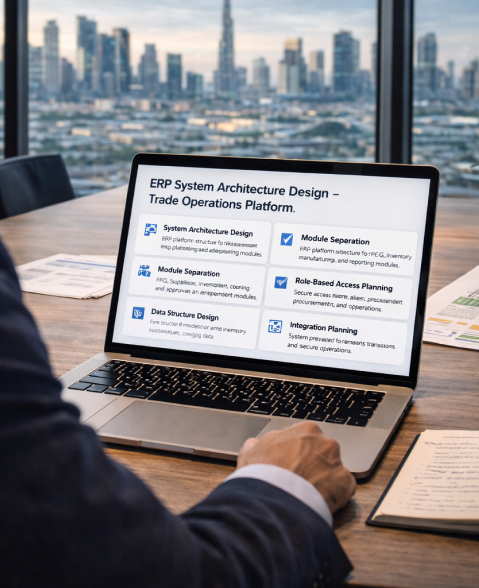
With strategy finalized, the ERP system architecture was designed to support RFQ processing, supplier interaction, inventory tracking, and manufacturing workflows using enterprise web application architecture standards.
System Architecture Design: Platform structure designed for RFQ, inventory, manufacturing, and reporting modules. ➤ Module Separation: RFQ, supplier, inventory, costing, and approvals built as independent ERP modules. ➤ Role-Based Access Planning: Secure access levels defined for admin, sales, procurement, and operations users. ➤ Data Structure Design: Accurate data models created for RFQs, inventory, and costing. ➤ Integration Planning: Architecture prepared for future ERP, vendor, and reporting integrations. ➤ Scalability & Security Planning: Design accounted for transaction growth, performance, and data security.
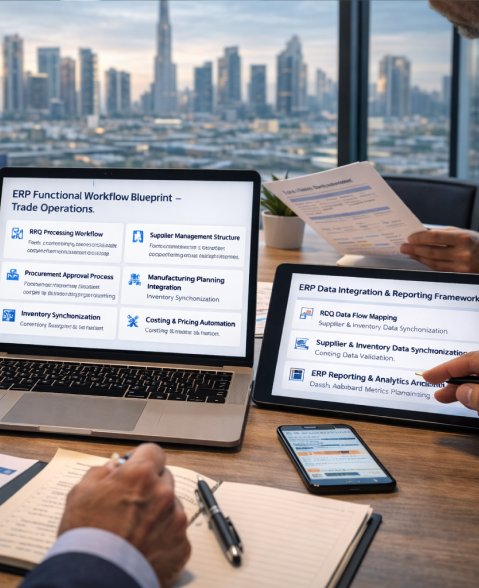
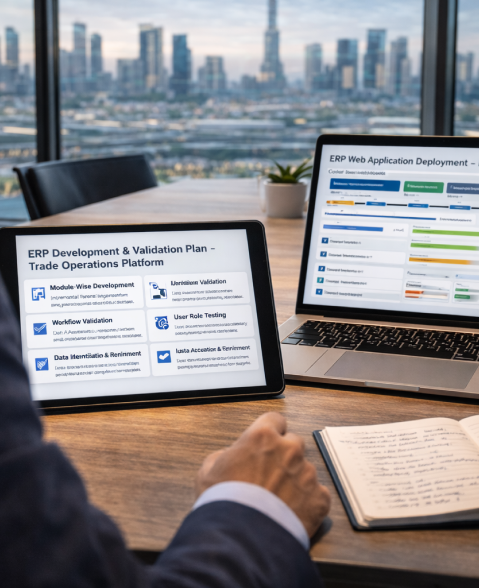
Once architecture was finalized, the ERP web application was developed iteratively to ensure accuracy, reliability, and alignment with real trading operations through custom Web App Development services.
Module-Wise Development: RFQ, supplier, inventory, and costing modules developed in structured phases. ➤ Incremental Feature Implementation: Features released step by step to maintain system stability. ➤ Workflow Validation: RFQ and procurement workflows tested against real business scenarios. ➤ User Role Testing: Admin, sales, procurement, and operations workflows validated independently. ➤ Data Accuracy Verification: Inventory levels, costing logic, and RFQ calculations verified. ➤ Issue Identification & Refinement: Feedback-driven refinements completed before final rollout.