Our Methodology for Building
Reliable Medical Camp Management Platforms
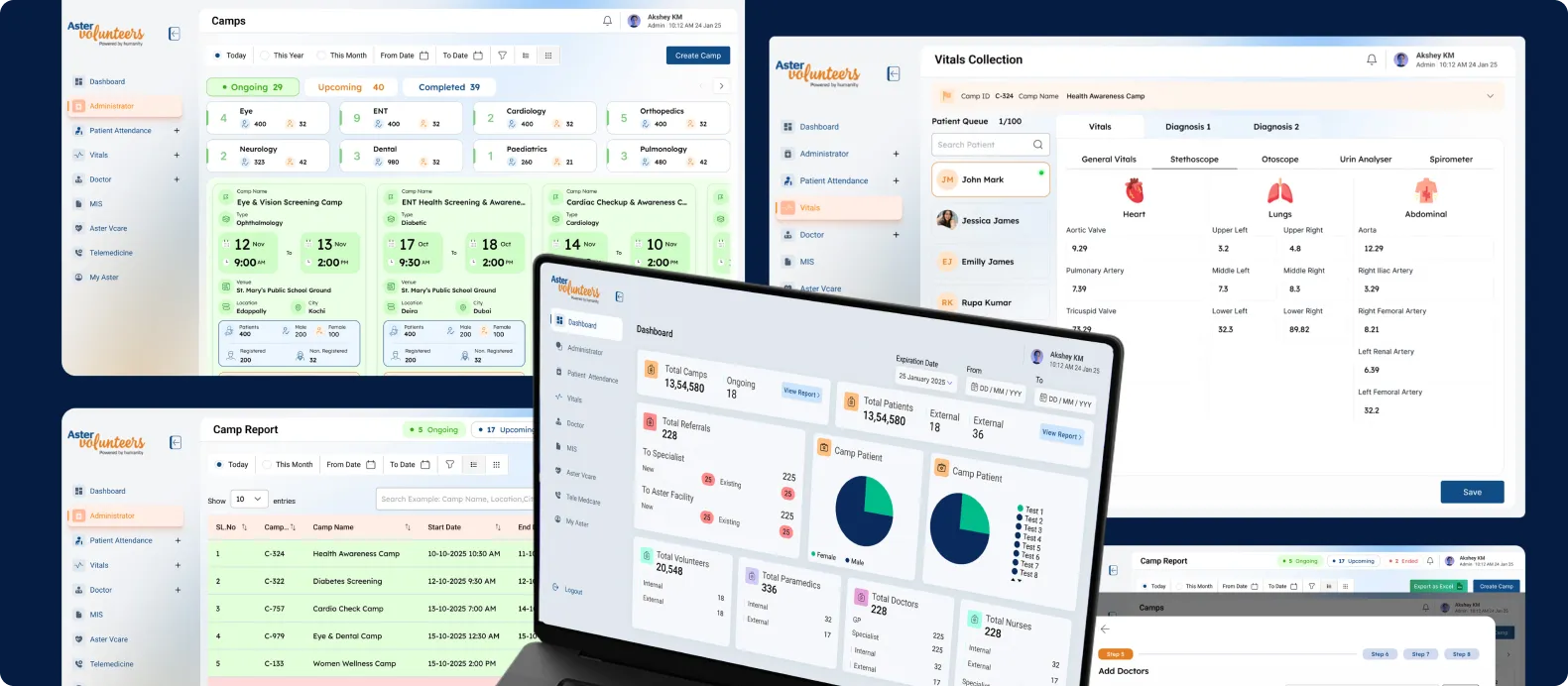
At Webotix, we follow a structured, healthcare-first and scalability-driven methodology to
build enterprise medical camp management platforms. Our approach ensures accurate patient
registration, real-time clinical tracking, transparent reporting, and secure data access
while supporting multi-location medical camps, diverse healthcare teams, and long-term
healthcare outreach programs.
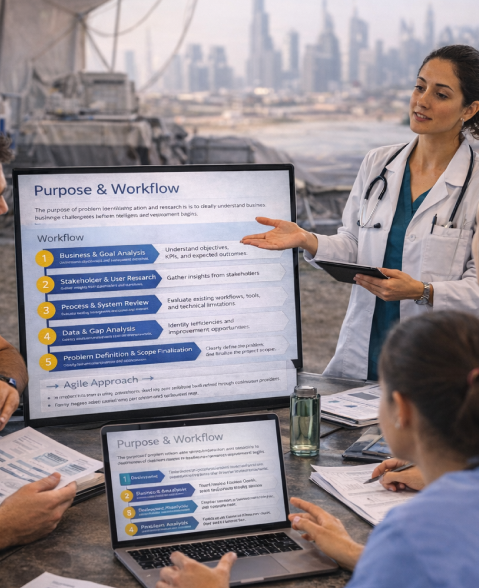
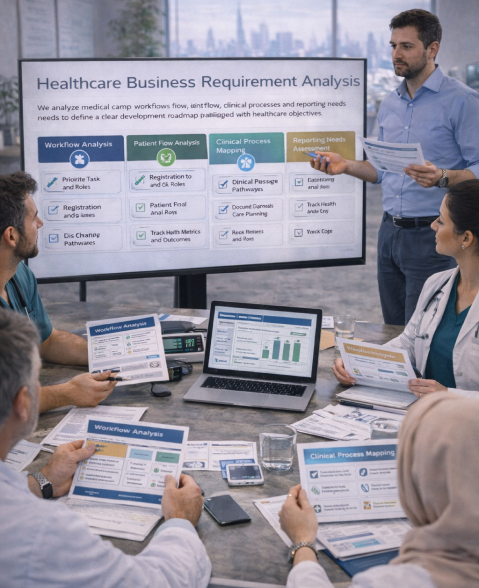
To deeply understand the client’s medical camp ecosystem, healthcare workflows, patient flow, staff roles, and limitations of manual camp operations, and translate these insights into a clearly defined medical camp management problem space. This phase ensures real-world camp workflows, clinical data capture needs, reporting expectations, and compliance considerations are fully analyzed before solution design begins.
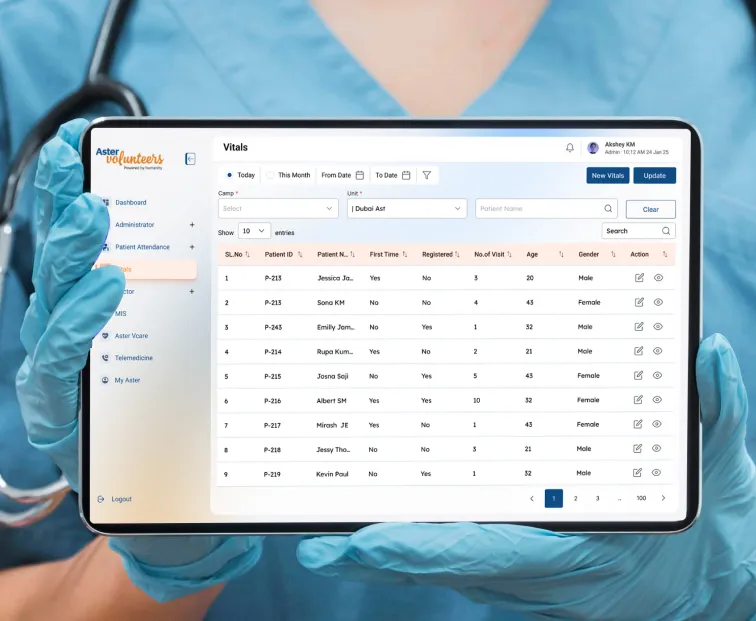
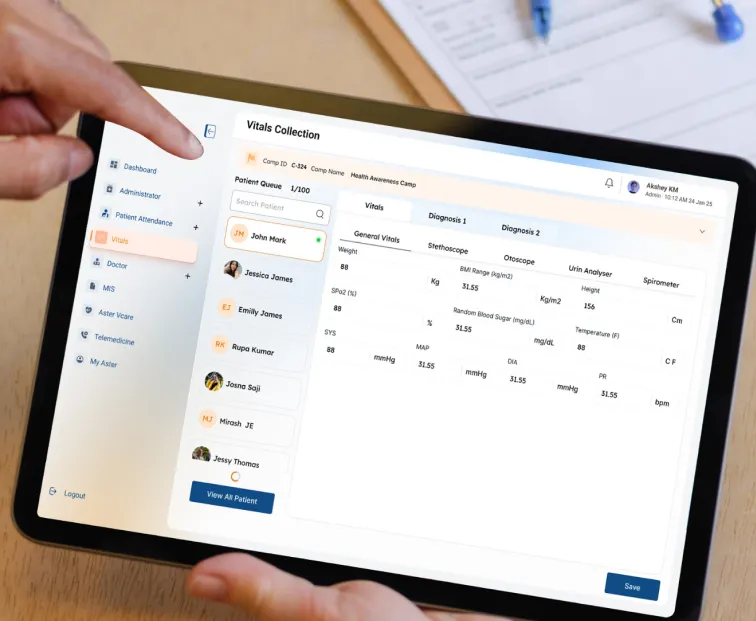
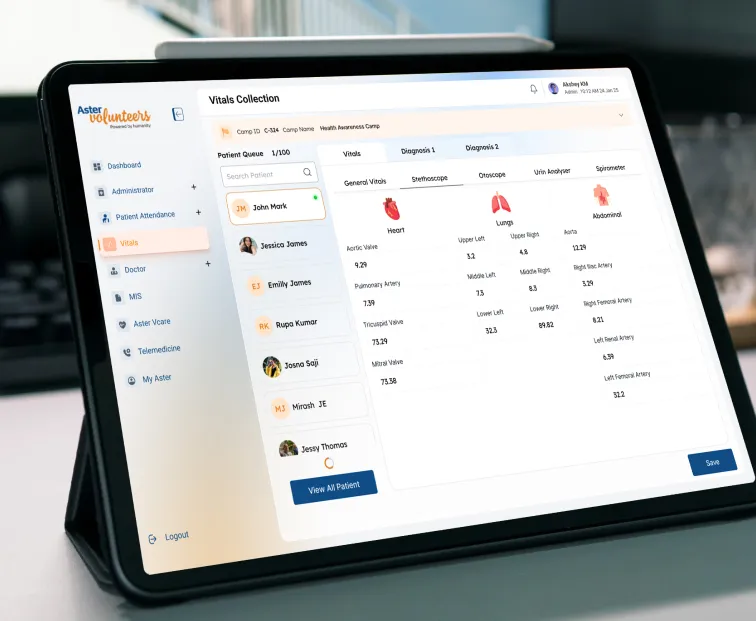
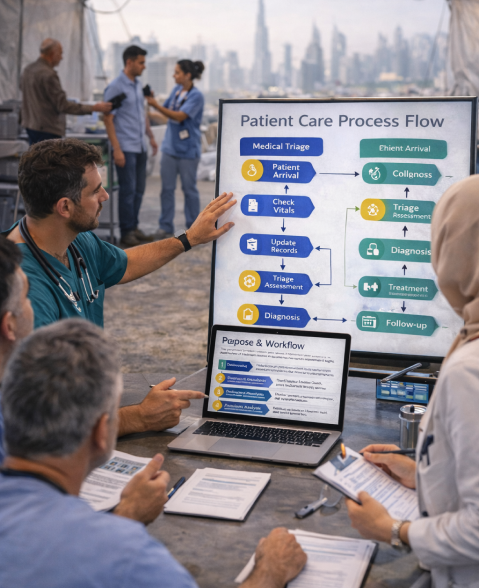
Medical Camp Workflow Analysis: Studied camp setup, patient registration, vitals collection, consultations, referrals, and reporting workflows. ➤ Existing Process & Data Review: Analyzed paper-based registrations, manual vitals records, spreadsheets, and post-camp reports to identify gaps. ➤ Clinical Role Assessment: Reviewed responsibilities of doctors, nurses, paramedics, volunteers, and administrators. ➤ Patient & IoT Data Flow Mapping: Mapped patient journeys and vitals flow from IoT devices to dashboards and MIS reports. ➤ Risk & Scalability Evaluation: Identified risks related to data accuracy, patient volume, multi-camp execution, and reporting delays.
- Conducted discovery sessions with healthcare coordinators and camp administrators
- Broke down complex medical workflows into structured digital processes
- Validated assumptions using real camp scenarios
- Prioritized features based on clinical accuracy and operational impact
- Maintained continuous alignment between healthcare teams and technical teams
- Clear definition of medical camp platform scope and objectives
- Reduced clinical and operational risks
- Strong alignment between healthcare goals and system design
- Faster decision-making with validated workflows
- Solid foundation for scalable medical camp platforms
To convert identified medical camp challenges, clinical needs, and reporting expectations into structured, actionable system requirements that guide the development of a reliable camp management platform.
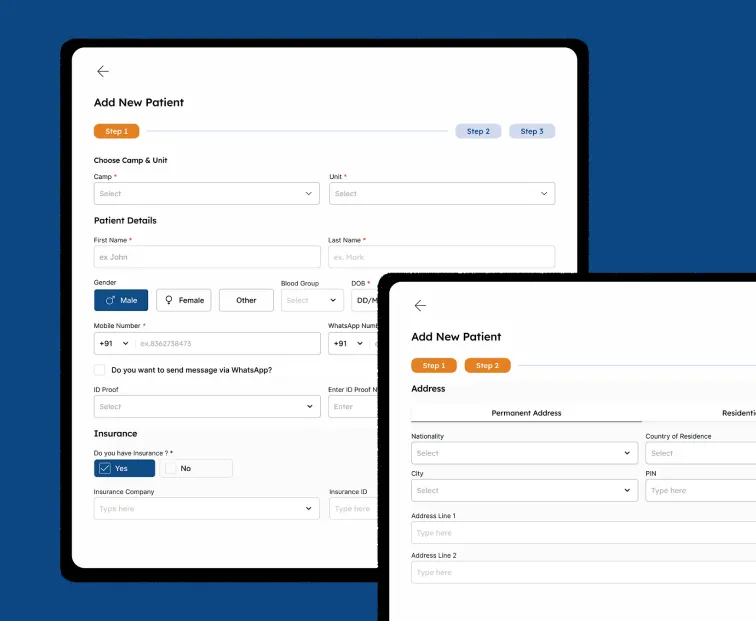
Stakeholder Requirement Collection: Captured requirements from doctors, nurses, paramedics, volunteers, and administrators. ➤ Functional Requirement Definition: Defined patient registration, vitals tracking, consultations, referrals, and MIS reporting. ➤ Non-Functional Requirement Identification: Outlined performance, scalability, data security, and availability requirements. ➤ Integration & Dependency Mapping: Mapped dependencies between patient records, clinical modules, reporting dashboards, and intranet access. ➤ Requirement Validation & Sign-Off: Reviewed and validated requirements with healthcare stakeholders.
- Converted requirements into structured epics and user stories
- Maintained traceability between requirements and platform features
- Conducted iterative reviews to avoid scope ambiguity
- Prioritized requirements based on healthcare criticality
- Ensured early alignment between operations and development teams
- Clearly documented requirements ready for execution
- Reduced rework during development
- Improved coordination between healthcare and technical teams
- Faster transition from planning to design
- Strong foundation for scalable implementation
To design a comprehensive medical camp management solution by defining platform features, modules, and workflows that support patient care, clinical tracking, and reporting.
Feature Identification: Identified core features such as patient registration, vitals capture, consultations, referrals, and MIS. ➤ Module Structuring: Organized features across admin portal and clinical user modules. ➤ Workflow Definition: Designed end-to-end flows for patient visits, medical checks, and reporting. ➤ Feature Prioritization: Prioritized features based on clinical accuracy and camp efficiency. ➤ Roadmap Finalization: Prepared a phased delivery roadmap for multi-camp rollout.
- Planned features in incremental delivery phases
- Balanced immediate camp needs with long-term scalability
- Reviewed scope during sprint planning cycles
- Ensured alignment between solution design and feasibility
- Maintained flexibility for future healthcare expansion
- Clear visibility into platform capabilities
- Reduced implementation risks
- Faster delivery of critical healthcare features
- Better control over timelines and effort
- Future-ready platform roadmap
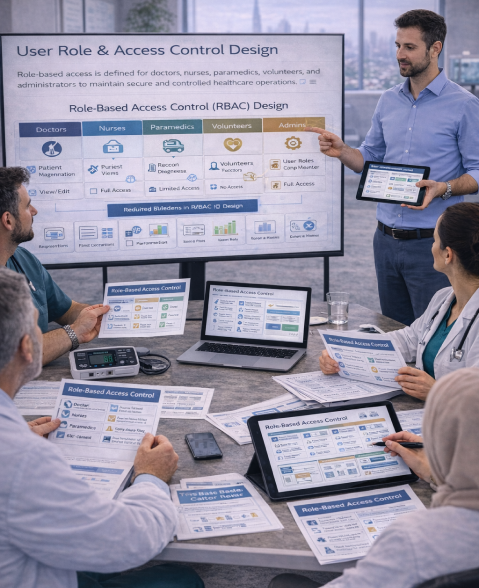
To design intuitive, role-based user journeys that simplify data entry for healthcare staff while providing clear oversight and control for administrators.
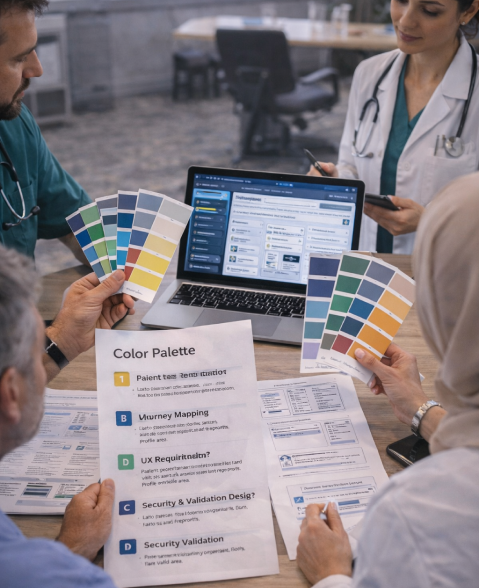
User Role Identification: Defined journeys for doctors, nurses, paramedics, volunteers, and admins. ➤ Journey Mapping: Mapped workflows for patient registration, vitals entry, consultations, and reports. ➤ UX Simplification: Designed clean interfaces optimized for fast-paced medical environments. ➤ Security & Validation Design: Integrated validations, confirmations, and access controls. ➤ Usability Validation: Reviewed journeys for speed, clarity, and accuracy.
- Designed journeys iteratively based on stakeholder feedback
- Validated usability before development
- Ensured UX aligned with clinical workflows
- Refined flows during sprint reviews
- Maintained consistency across the platform
- Faster patient processing
- Reduced data entry errors
- Higher adoption by medical staff
- Improved trust in clinical data
- Consistent experience across roles
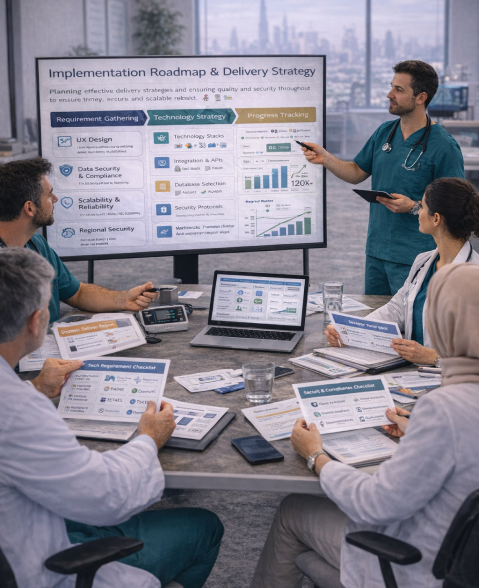
To design a secure, scalable, and enterprise-ready architecture capable of supporting high patient volumes, multi-camp operations, and long-term healthcare programs.
Technology Stack Evaluation: Reviewed frameworks and databases suitable for healthcare web platforms. ➤ API & Integration Architecture Design: Defined APIs for data flow across modules and reports. ➤ Security Architecture Planning: Planned authentication, authorization, and data protection mechanisms. ➤ Scalability & Performance Design: Designed architecture to handle peak camp loads. ➤ Future Readiness Assessment: Ensured architecture supports new camps and regions.
- Selected technologies aligned with reliability and scalability
- Validated architecture through iterative reviews
- Balanced performance and maintainability
- Enabled modular development
- Maintained flexibility for future integrations
- Stable and reliable healthcare platform
- Improved system performance
- Faster onboarding of new medical camps
- Reduced long-term technical risk
- Sustainable foundation for healthcare outreach programs