Our End-to-End Intranet Development Process
We follow a structured and milestone-driven approach to design and
develop secure, scalable,
and performance-oriented intranet solutions tailored to internal business operations. From
requirement analysis and workflow mapping to development, testing, deployment, and ongoing
support, our process ensures seamless internal collaboration, data security, and long-term
operational efficiency.
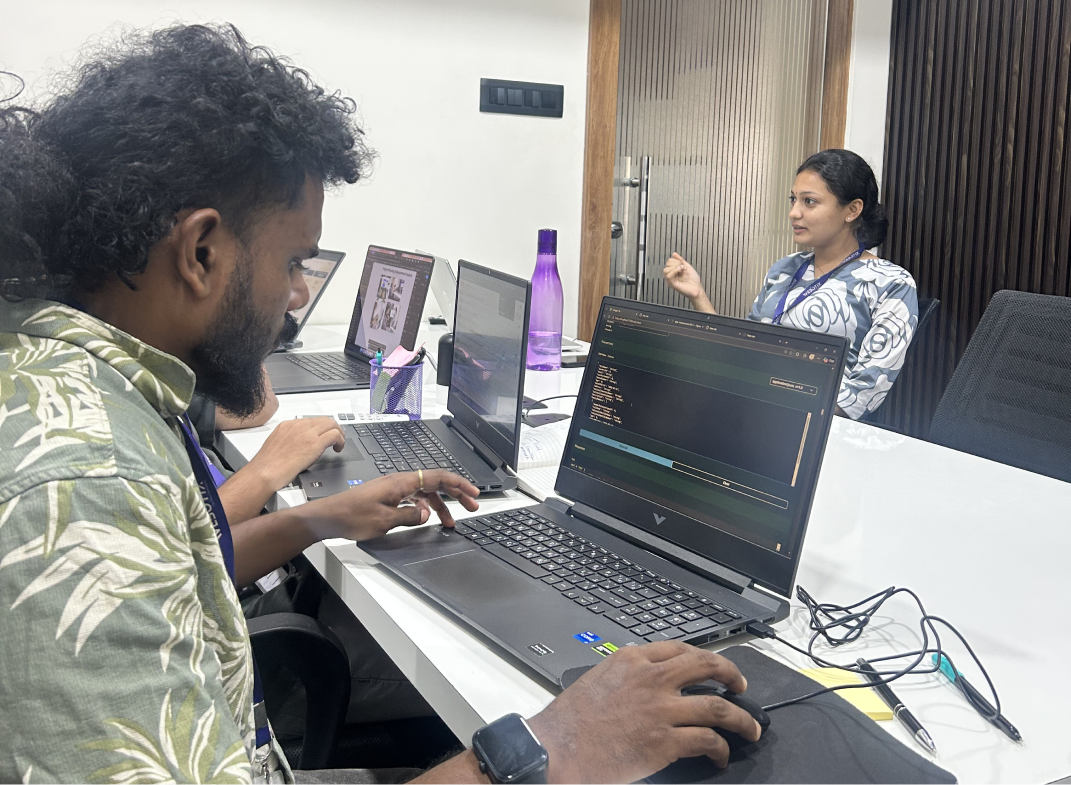
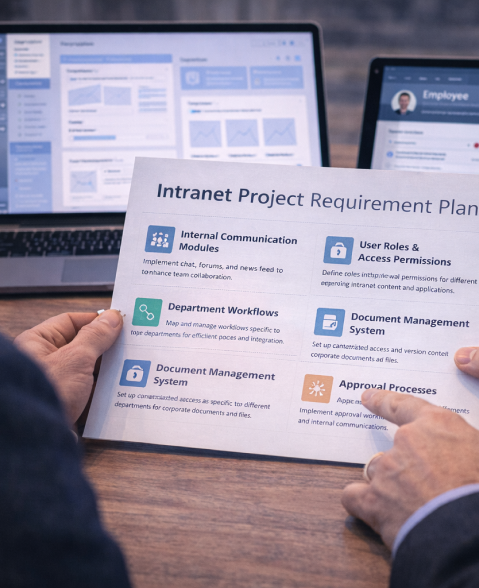
This phase focuses on understanding the organization’s internal objectives and translating them into clear, actionable requirements for Intranet Development projects. Through structured discussions, stakeholder workshops, and detailed documentation, Webotix ensures intranet scope, user roles, access levels, workflows, and success criteria are clearly defined. As an intranet development company in Dubai, Webotix delivers intranet development services in UAE that support internal communication, operational efficiency, and long-term organizational scalability.
Intranet Project Initiation & Proposal: ➤ Stakeholder & Department Requirement Gathering: ➤ Business & Functional Documentation: ➤ Intranet Structure, Wireframes & UX Direction: ➤ Technical Architecture & Integration Finalization: ➤ Validation & Development Readiness:
- Conduct stakeholder meetings, internal discovery workshops, and intranet requirement walkthroughs
- Prepare intranet project proposals covering scope, user groups, timelines, resources, and cost
- Prepare structured BA documents including BRD, intranet workflows, access matrices, assumptions & constraints, and functional specifications
- Maintain clarification logs and approval trackers across departments
- Create intranet wireframes and collaborate with UX teams for layout and usability validation
- Enable developers to plan intranet architecture, authentication, integrations, and deployment approach
- Create and manage structured intranet task backlogs
- Support QA teams in preparing intranet validation scenarios
- Participate in sprint planning, reviews, and progress tracking
- Monitor approvals, milestones, and documentation for predictable delivery
- Approved intranet project proposal with defined scope, timeline, and cost
- Well-documented BRD, workflows, wireframes, and access structures
- Client-approved intranet UX and navigation direction
- Clearly planned intranet architecture and integration setup
- Prioritized backlog ready for execution
- Strong alignment between stakeholders, development, and QA teams
- Solid foundation for high-quality Intranet Development Services
This phase focuses on creating and maintaining a prioritized intranet development backlog that defines modules, features, permissions, integrations, and technical tasks. It ensures teams always have approved, execution-ready items, supporting structured custom intranet development in UAE.
Backlog Item Identification from Approved Requirements: ➤ Module & Task Definition: ➤ Backlog Prioritization: ➤ Effort & Complexity Estimation: ➤ Backlog Review & Refinement: ➤ Backlog Validation & Approval:
- Convert approved intranet workflows and wireframes into backlog items
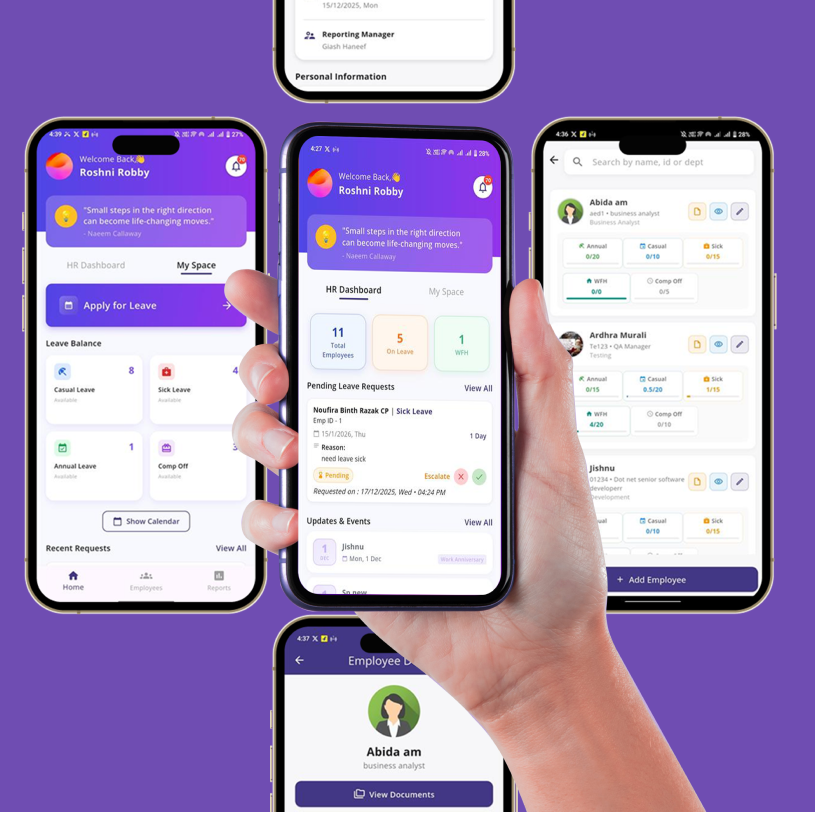
- Define module-level tasks such as dashboards, document management, approvals, and communication tools
- Add technical tasks for authentication, role management, security, and integrations
- Prioritize backlog based on operational impact and dependency order
- Estimate effort with intranet developers and QA teams
- Review backlog continuously with internal stakeholders
- Refine items to ensure clarity and sprint readiness
- Maintain an approved backlog for uninterrupted execution
- Approved and prioritized intranet backlog
- Clear tasks for developers and system administrators
- Improved visibility into scope and dependencies
- Higher sprint planning accuracy
- Strong alignment between business operations and enterprise intranet development
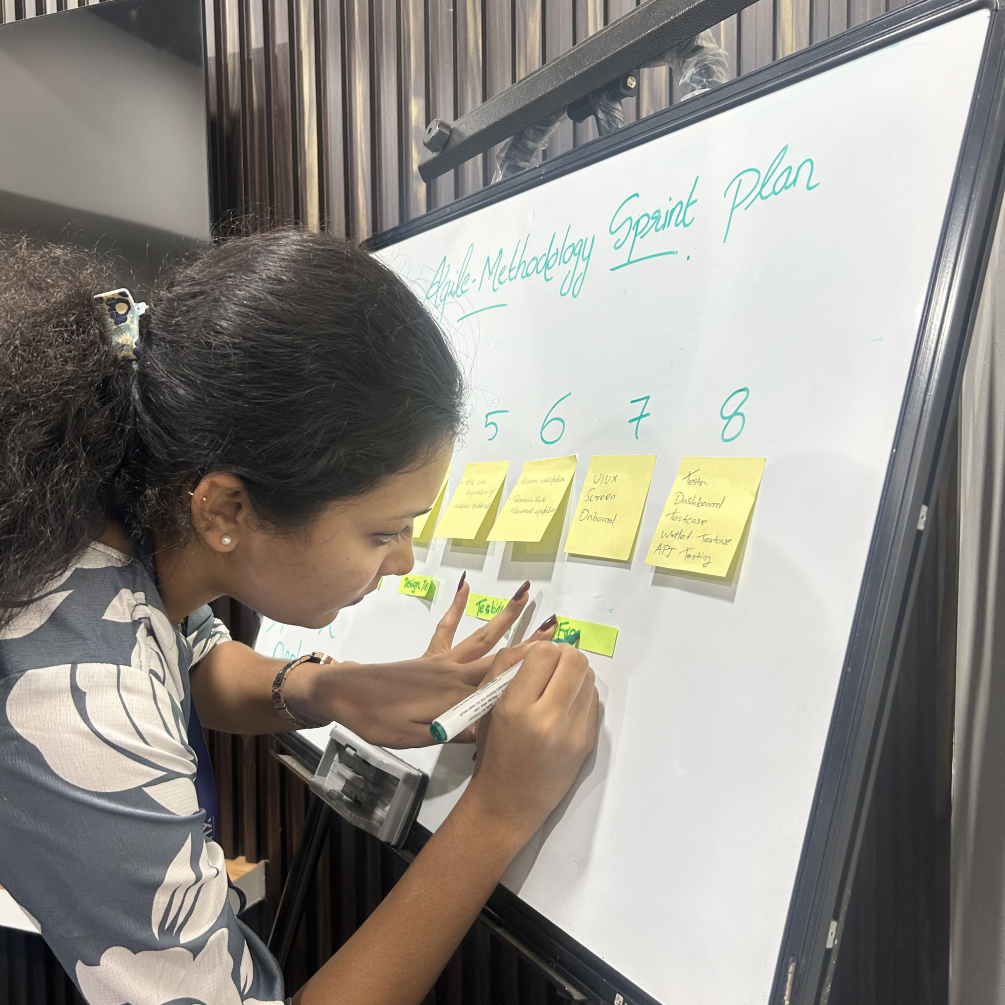
This phase organizes approved intranet requirements into structured sprints to ensure controlled execution. Webotix uses sprint planning to convert finalized intranet designs and workflows into clear development tasks aligned with organizational priorities across Dubai and the UAE.
Sprint Scope Finalization: ➤ Sprint Backlog Selection: ➤ Task Breakdown & Assignment: ➤ Effort & Timeline Estimation: ➤ Dependency & Resource Planning: ➤ Sprint Goal Confirmation:
- Review approved intranet workflows, wireframes, and access models
- Convert requirements into sprint backlog tasks
- Break down work into frontend, backend, integration, and security tasks
- Assign tasks based on technical expertise and availability
- Estimate realistic timelines for delivery
- Identify dependencies such as directory services, APIs, or third-party tools
- Align sprint goals with internal rollout milestones
- Finalize sprint scope to avoid rework
- Clearly defined intranet sprint goals
- Structured sprint backlog for intranet development
- Balanced workload across teams
- Predictable delivery timelines
- Controlled execution for intranet development in Dubai
This phase focuses on converting approved intranet wireframes into final UI/UX designs and building fully functional intranet systems. Webotix ensures designs are validated before development to align with internal workflows and user expectations.
Intranet UI/UX Design Creation: ➤ Stakeholder Design Review & Approval: ➤ Design Handover to Development Team: ➤ Intranet Application Development: ➤ Internal Testing & Issue Identification: ➤ Fixes, Enhancements & Iteration:
- Design intranet interfaces aligned with usability and internal efficiency
- Share designs with stakeholders for feedback and approval
- Develop secure, role-based intranet applications
- Implement document management, workflows, dashboards, and integrations
- Coordinate with QA teams for functional validation
- Refine features until approval standards are met
- Approved intranet UI/UX designs
- Fully functional intranet platform
- Reduced rework through early validation
- Secure and optimized intranet codebase
- High-quality output from an intranet development company
This phase ensures the intranet platform meets defined quality, performance, security, and usability standards before organization-wide rollout.
Design & Workflow Review: ➤ Functional Validation: ➤ Query & Clarification: ➤ Test Case Preparation: ➤ Manual & Scenario Testing: ➤ Issue Resolution & Release Readiness:
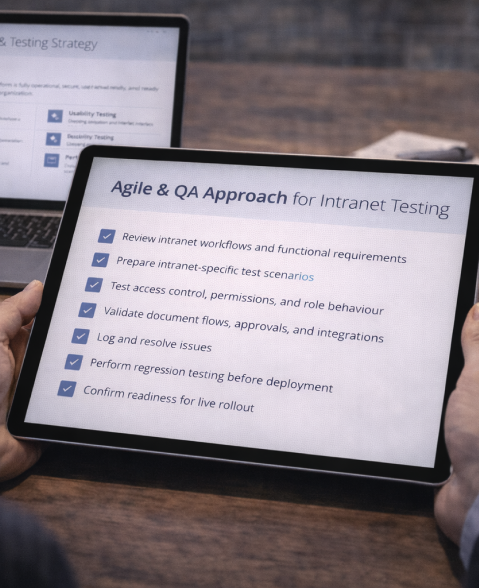
- Review intranet workflows and functional requirements
- Prepare intranet-specific test scenarios
- Test access control, permissions, and role behaviour
- Validate document flows, approvals, and integrations
- Log and resolve issues
- Perform regression testing before deployment
- Confirm readiness for live rollout
- Stable and validated intranet system
- Reduced post-launch issues
- Verified performance and usability
- High confidence in intranet readiness
This phase ensures intranet platforms are deployed smoothly, securely, and reliably into live environments while providing continuous support after launch. Webotix follows structured release and support practices to deliver cloud-based and enterprise intranet development across Dubai and Abu Dhabi, ensuring long-term usability and adoption.
Release Planning & Approval: ➤ Build & Configuration Finalization: ➤ QA Validation: ➤ Staging Deployment: ➤ Production Deployment: ➤ Post-Deployment Monitoring:
- Plan intranet rollout timelines, user access phases, and department-wise enablement
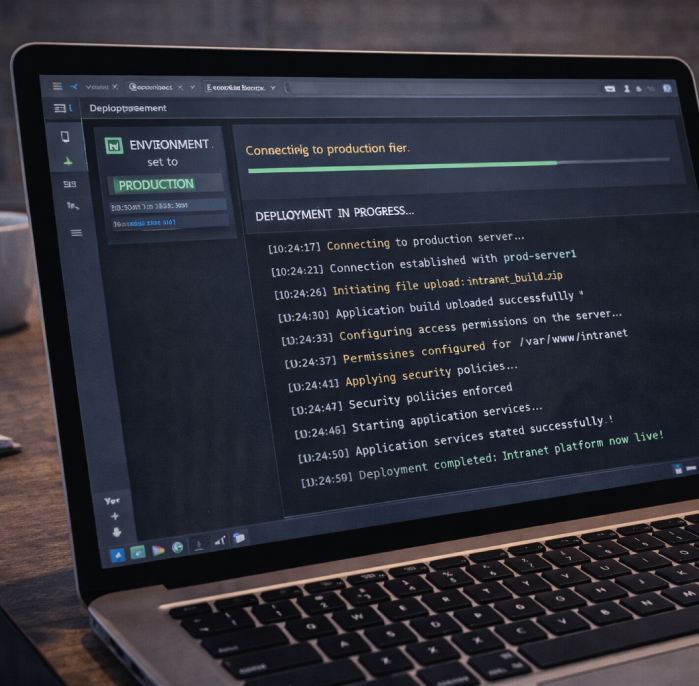
- Prepare final intranet builds, configurations, roles, and permissions
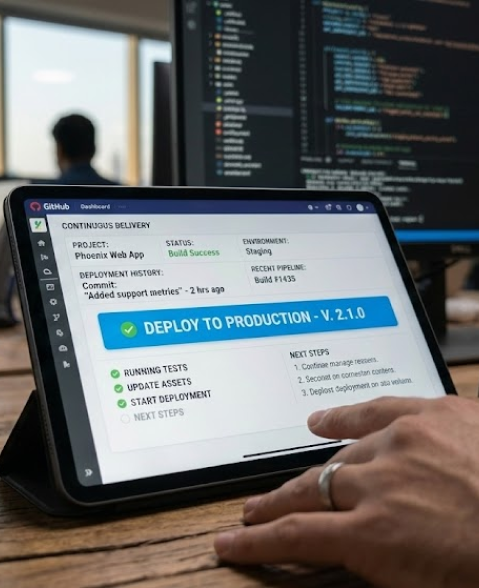
- Deploy intranet systems to staging and production environments
- Perform post-deployment validation and functional checks
- Monitor intranet performance, usage, and system stability
- Evaluate how teams are using the intranet in real operational scenarios
- Conduct regular review and support meetings with stakeholders
- Identify improvement areas, enhancements, and usability optimizations
- Implement refinements to improve productivity and user engagement
- Provide ongoing technical and functional support for immediate business needs
- Execute rollbacks or fixes quickly if critical issues arise
- Capture feedback to continuously improve intranet performance and adoption
- Smooth intranet rollout
- Stable live intranet platform
- Reduced deployment risks
- Improved system reliability
- Faster internal adoption