Our End-to-End E-Commerce Development Process
We follow a structured and milestone-driven approach to transform business requirements into
secure, scalable, and high-performance ecommerce platforms. From requirement analysis and
user journey planning to design, development, payment integration, testing, deployment, and
post-launch support, our process ensures seamless shopping experiences, secure transactions,
and long-term business growth.
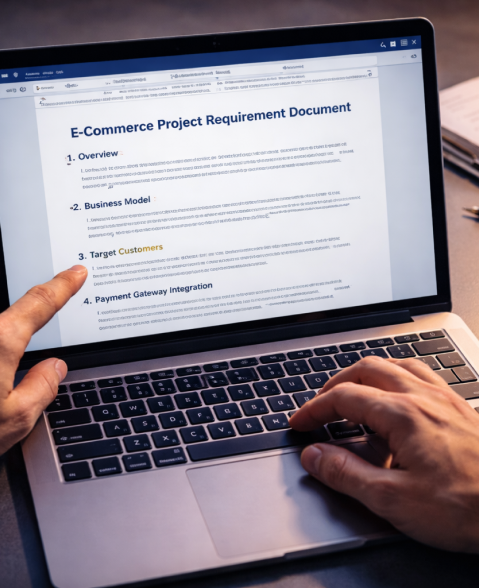
This phase focuses on understanding the client’s business model, products, customers, and sales objectives, and translating them into clear, actionable requirements for E-Commerce Development projects. Through structured discussions, discovery workshops, and detailed documentation, Webotix ensures ecommerce scope, platform selection, product structure, payment flows, and success criteria are clearly defined. As an ecommerce development company in Dubai, Webotix delivers ecommerce development services in Dubai and UAE that support real selling operations, scalable growth, and long-term digital commerce success.
E-Commerce Project Initiation & Proposal: ➤ Detailed Business, Product & Requirement Gathering: ➤ Business & Functional Documentation: ➤ Store Architecture, User Flows & UX Direction: ➤ Technical, Platform & Process Finalization: ➤ Validation & Development Readiness:
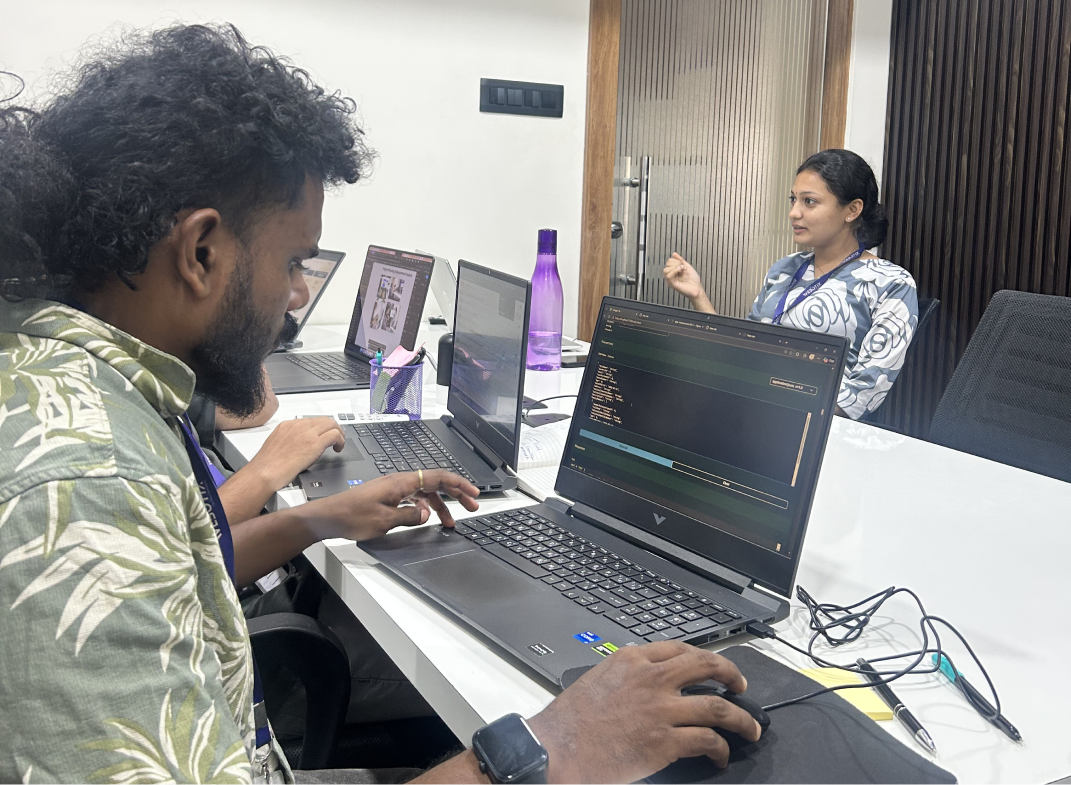
- Conduct client meetings and ecommerce discovery workshops
- Prepare ecommerce proposals covering platform scope, features, timelines, resources, and cost
- Prepare structured documents including BRD, functional flows, checkout journeys, assumptions & constraints, and specifications
- Maintain clarification trackers for business, payment, logistics, and integrations
- Define product catalog structure, pricing logic, tax rules, and order workflows
- Enable developers to plan ecommerce architecture, CMS, payment gateways, shipping, and third-party integrations
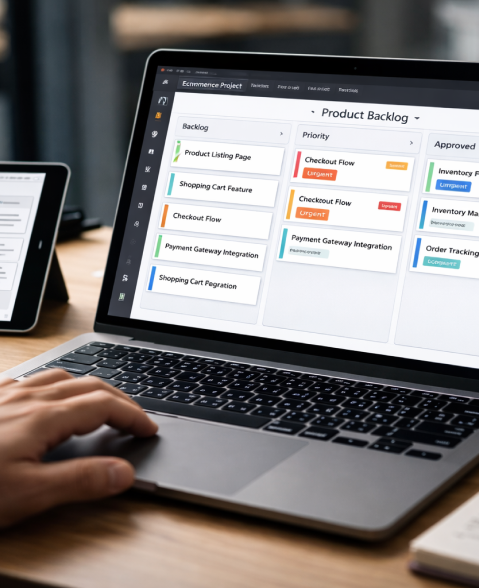
- Create and manage structured ecommerce task backlogs
- Support QA teams in preparing ecommerce validation scenarios
- Participate in sprint planning, reviews, and progress tracking
- Track approvals, milestones, and documentation for predictable delivery
- Approved ecommerce project proposal with clear scope, timeline, and cost
- Well-documented BRD, functional flows, catalog structure, and assumptions
- Defined ecommerce UX and store structure
- Well-planned ecommerce architecture and platform setup
- Prioritized task backlog ready for execution
- Strong alignment between business, design, development, and QA teams
- Solid foundation for high-quality E-Commerce Development Services
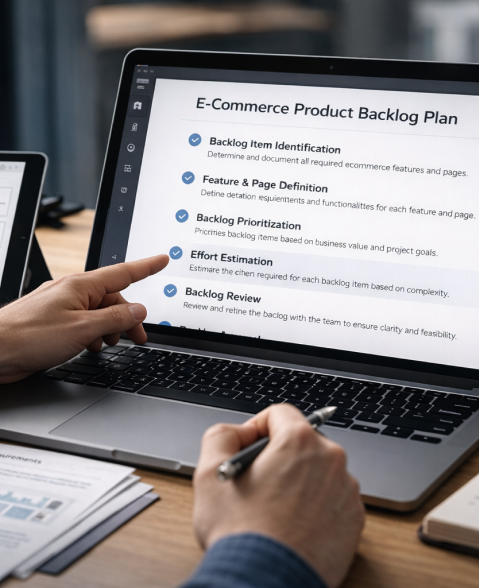
This phase focuses on creating and maintaining a prioritized ecommerce development backlog that defines store pages, product features, checkout flows, integrations, and technical tasks. It ensures teams always have approved and ready items for execution, supporting structured ecommerce development services in UAE.
Backlog Item Identification from Approved Requirements: ➤ Feature, Page & Task Definition Definition: ➤ Backlog Prioritization: ➤ Effort & Complexity Estimation: ➤ Backlog Review & Refinement: ➤ Backlog Validation & Approval:
- Convert approved ecommerce requirements into backlog items
- Define tasks for product management, checkout, payments, shipping, and admin panels
- Add technical tasks for performance optimization, SEO, security, and scalability
- Prioritize backlog based on revenue impact and operational needs
- Estimate effort with development and QA teams
- Review backlog regularly with stakeholders
- Maintain an approved backlog for continuous execution
- Approved and prioritized ecommerce development backlog
- Clear tasks for developers and designers
- Improved visibility into scope and dependencies
- Better sprint planning accuracy
- Strong alignment between business goals and E-Commerce Development
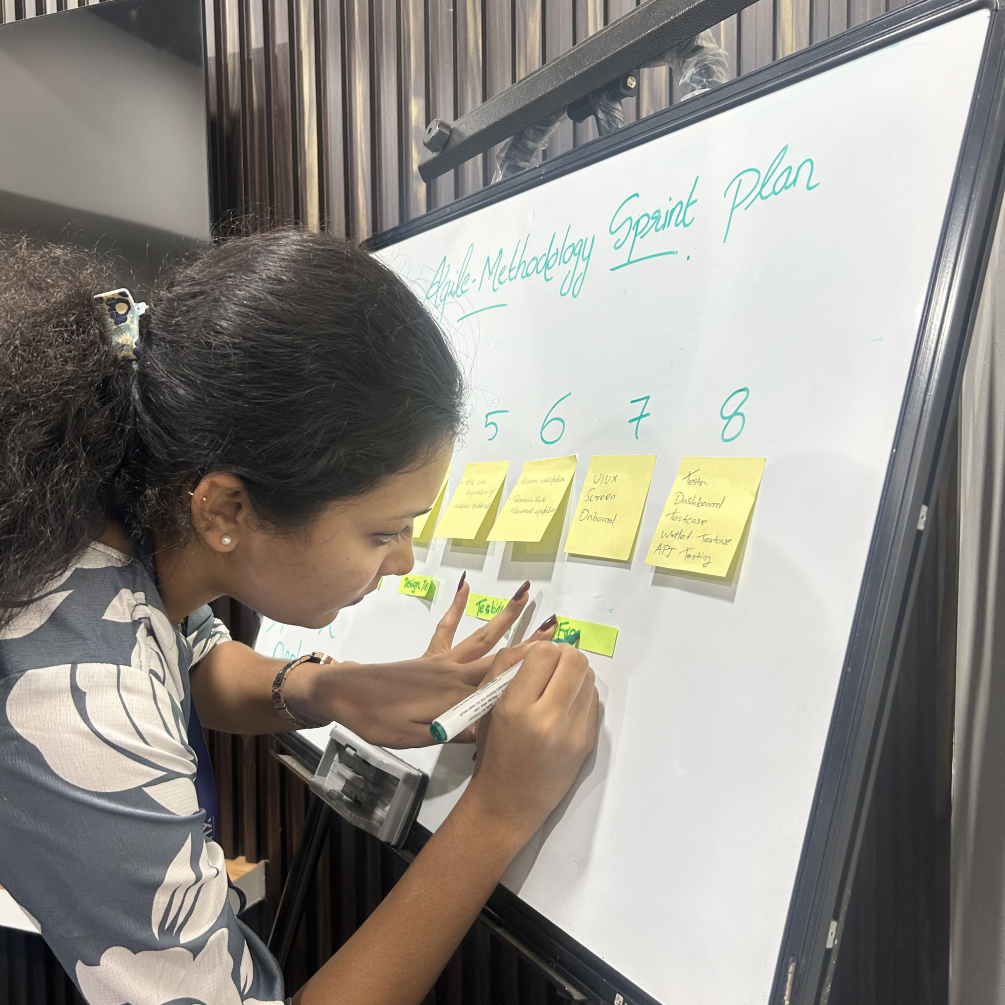
This phase organizes approved ecommerce requirements into structured sprints to ensure controlled and predictable execution. Webotix uses sprint planning to convert finalized ecommerce features into clear development tasks aligned with business priorities across Dubai and the UAE.
Sprint Scope Finalization: ➤ Sprint Backlog Selection: ➤ Task Breakdown & Assignment: ➤ Effort & Timeline Estimation: ➤ Dependency & Resource Planning: ➤ Sprint Goal Confirmation:
- Review approved ecommerce requirements and store structure
- Convert requirements into sprint backlog items
- Break down work into frontend, backend, payment, and integration tasks
- Assign tasks based on technical expertise
- Estimate timelines for realistic delivery
- Identify dependencies such as payment gateway approvals or logistics setup
- Align sprint goals with business milestones
- Finalize sprint scope to avoid rework
- Clearly defined sprint goals
- Structured sprint backlog for ecommerce development
- Balanced workload across teams
- Predictable delivery timelines
- Controlled execution for high-quality ecommerce solutions in Dubai
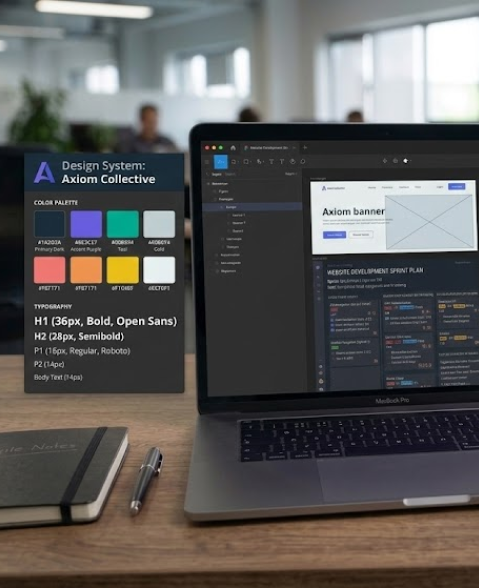
This phase focuses on converting approved ecommerce flows and designs into fully functional online stores. Webotix ensures designs are validated before development so the final ecommerce platform aligns with user experience, brand identity, and conversion goals.
E-Commerce UI/UX Design Creation: ➤ Client Design Review & Approval: ➤ Design Handover to Development Team: ➤ E-Commerce Development: ➤ Internal Testing & Issue Identification: ➤ Fixes, Updates & Iteration:
- Design conversion-focused ecommerce UI/UX
- Share designs for feedback and approval
- Develop responsive, SEO-friendly ecommerce platforms
- Implement product catalogs, carts, checkout, and admin dashboards
- Integrate payment gateways, shipping, and third-party services
- Coordinate with QA for testing
- Fix issues and refine until approval
- Client-approved ecommerce designs
- Fully functional online store
- Reduced rework through early validation
- Secure and optimized ecommerce code
- High-quality output from an E-Commerce Development Company
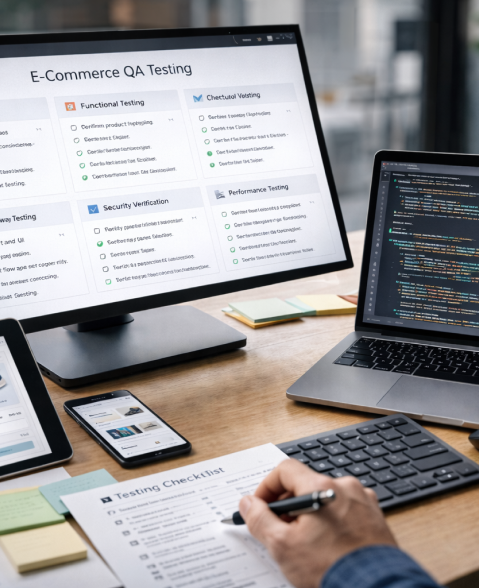
This phase ensures the ecommerce platform meets defined quality, performance, security, and usability standards before launch.
Design & Flow Review: ➤ Functional Review: ➤ Query & Clarification: ➤ Test Case Preparation: ➤ Manual & Functional Testing: ➤ Issue Fixing & Release Readiness:
- Review ecommerce flows and requirements
- Prepare ecommerce testing checklists
- Test product browsing, cart, checkout, and payments
- Validate pricing, taxes, shipping, and admin workflows
- Test responsiveness across devices and browsers
- Log and fix issues
- Perform final regression testing
- Confirm readiness for live selling
- Stable and tested ecommerce platform
- Reduced launch risks
- Verified checkout and payment accuracy
- Confidence in ecommerce readiness
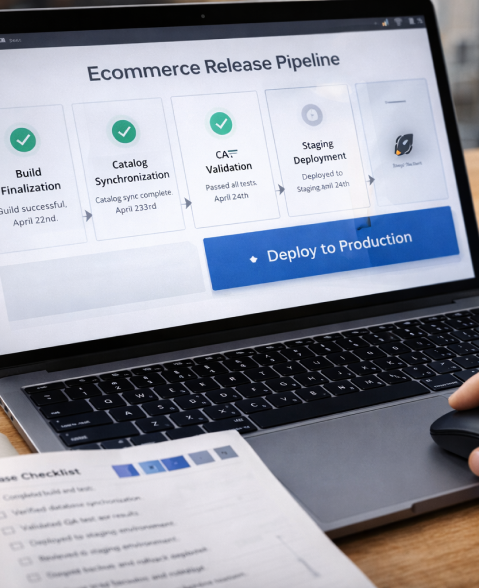
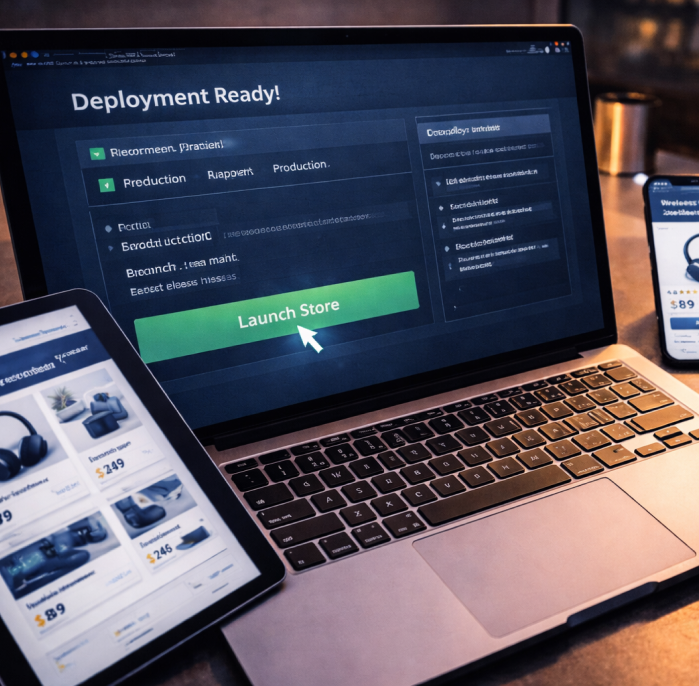
This phase ensures e-commerce platforms are deployed smoothly, securely, and reliably into live environments, with continuous support after launch. Our structured release practices ensure long-term performance, stability, and business continuity.
Release Planning & Approval: ➤ Build & Catalog Finalization: ➤ QA Validation: ➤ Staging Deployment: ➤ Production Deployment: ➤ Post-Launch Monitoring:
- Plan e-commerce go-live timelines and release scope
- Prepare final builds, product catalogs, pricing, and configurations
- Deploy e-commerce platforms to staging and production servers
- Perform post-launch validation and smoke testing
- Monitor live store performance, orders, payments, and stability
- Evaluate real-world usage and operational impact
- Review checkout flow, user behavior, and order processing
- Conduct review meetings to assess business benefits
- Identify enhancements and optimization opportunities
- Provide prompt support for urgent issues or changes
- Handle rollbacks or hotfixes if critical issues arise
- Capture feedback and metrics for continuous optimization
- Smooth ecommerce launch
- Stable live online store
- Reduced deployment risks
- Improved performance and reliability
- Faster time-to-market
- Strong confidence in live ecommerce operations